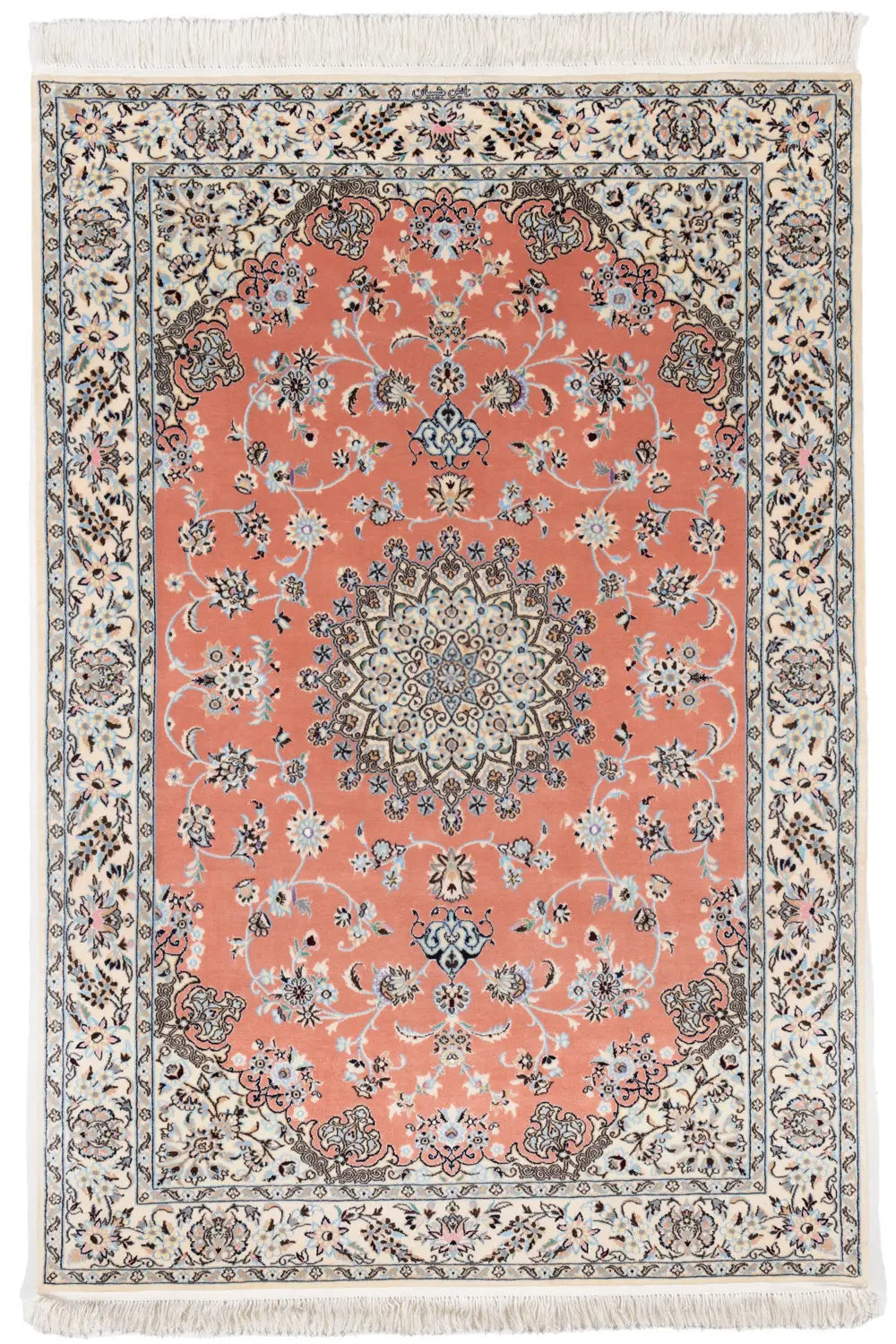

In the Safavid court of Iran, which ruled from the 16th to the 18th century, Persian rugs were not merely household items but important symbols of royal power and cultural sophistication. Their value extended beyond Iran, being widely recognized in European royal courts and aristocratic society, becoming treasured possessions across various nations. This article explores the role of Persian rugs in the Safavid court and their international spread.
Table of Contents
The Position of Persian Rugs in the Safavid Court
In the Safavid court, Persian rugs were treated as a symbol of prestige that transcended mere floor coverings. The magnificent rugs represented the power of the monarchy and cultural maturity, enhancing the dignity of the court space itself.
Court Workshops and the Golden Age of Carpet Art in the 16th Century
Successive Safavid monarchs established court workshops across various regions, employing skilled artisans to weave the highest quality rugs. With the patronage of the court, textile art reached its golden age in the 16th century, producing many masterpieces.
These court rugs were characterized by intricate and splendid designs using gold and silk threads, embodying the majesty of royal power as artistic crafts. Laid out in grand halls and audience chambers, they enhanced the authority of the entire space, and some were even dedicated to religious institutions such as mosques.
Introduction to Europe through Diplomatic Gifts and Trade
Safavid rugs were introduced to Europe through diplomatic gifts and East-West trade. In 1603, there is a record of Shah Abbas I presenting a luxurious rug woven with gold and silver threads to the Doge of the Republic of Venice.
Additionally, in 1602, King Sigismund III of Poland commissioned a Persian rug woven with his country's emblem as part of his daughter Anna's dowry. This record later became important evidence indicating that these rugs were made in Iran.
The Value of Persian Rugs for European Nobility
In European palaces, Persian rugs were treated as exotic luxury furnishings, treasured similarly to works of art. They were used not only as floor coverings but also as tablecloths and wall hangings, serving as symbolic representations of the owner's wealth and culture.
Even the Habsburg family adorned their summer residences with large rugs produced in the Safavid court, some of which still exist today as the "Emperor's Rugs." These examples illustrate the high regard Persian rugs held across borders.