

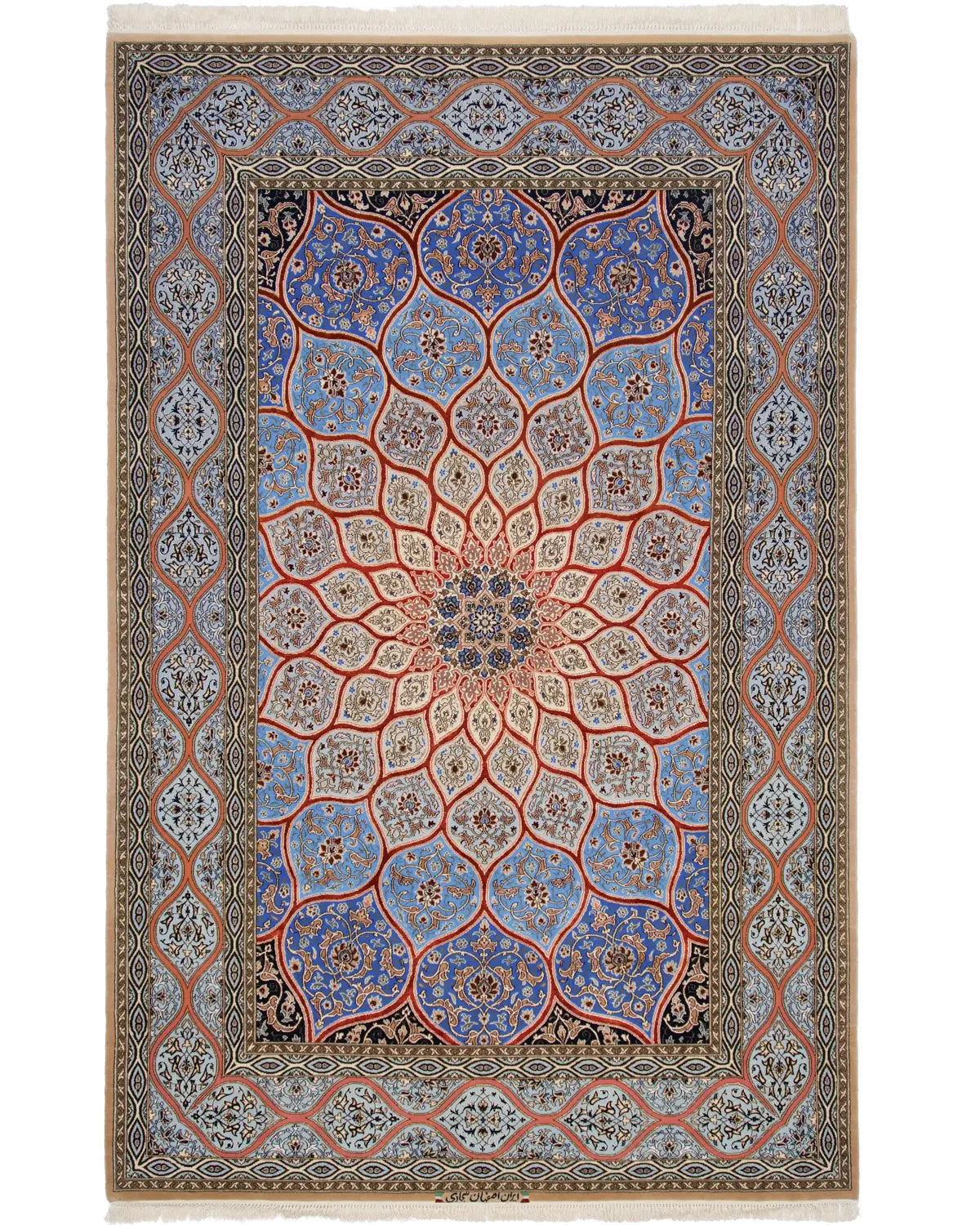
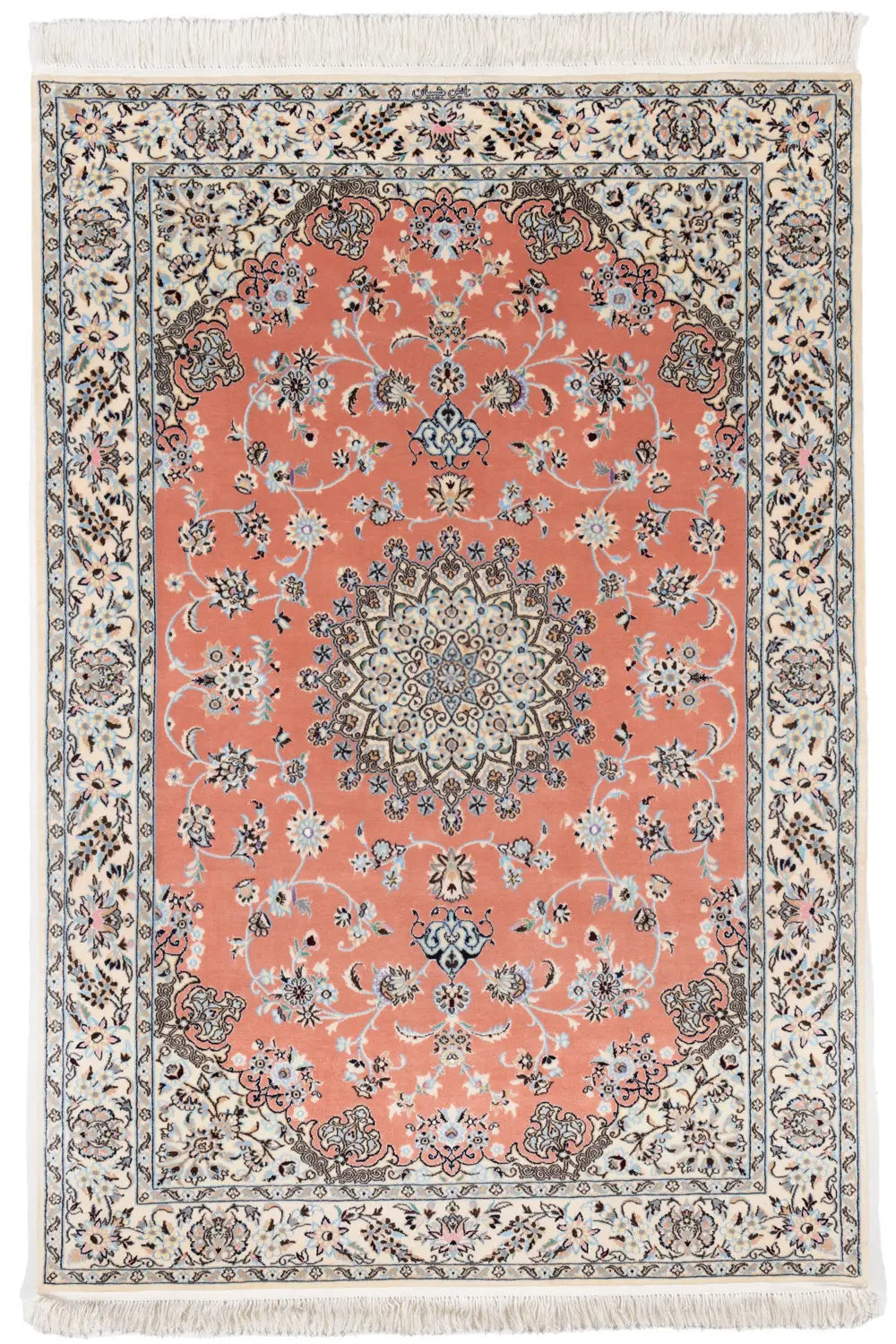

Persian rugs come in various designs, but one of the most popular is the geometric pattern. This design is commonly found not only in the carpets of famous towns but also in those of villages and tribes.
This geometric pattern, often seen in carpets from Heriz, Zanjan, Azerbaijan, Abadeh, and Qashqai, typically features angular shapes. These shapes can include hexagons, octagons, and diamonds, but there are no limits to the forms. Additionally, these designs may express various cultural and lifestyle elements.
Overall Geometric Design: During weaving, geometric motifs are arranged continuously. The variation in colors is characteristic and is often seen in carpets from Tabriz and Heriz.
Geometric Medallion: A geometric medallion is placed in the center of the carpet, surrounded by other designs. This style is commonly found in Persian carpets from villages and tribes, especially in Heriz and Abadeh.
Repeating Geometric Medallions: Geometric medallions are repeated throughout the carpet. This is particularly common in carpet runners, often seen in Heriz and Zanjan.
Utilizing Geometric Patterns in Interior Design: Geometric designs are suitable for decoration in various settings, from modern to traditional spaces. Particularly, due to their strong borders, they are effective in dining rooms. Depending on the choice of colors, they can create a calming atmosphere or serve as an accent in the room. For instance, a rug in soft colors can bring gentleness to the space, while those in darker colors or bold patterns can serve as the focal point of the room.
The simple design of geometric medallions often features basic shapes with little to no embellishment. Such designs are frequently seen in tribal rugs.
