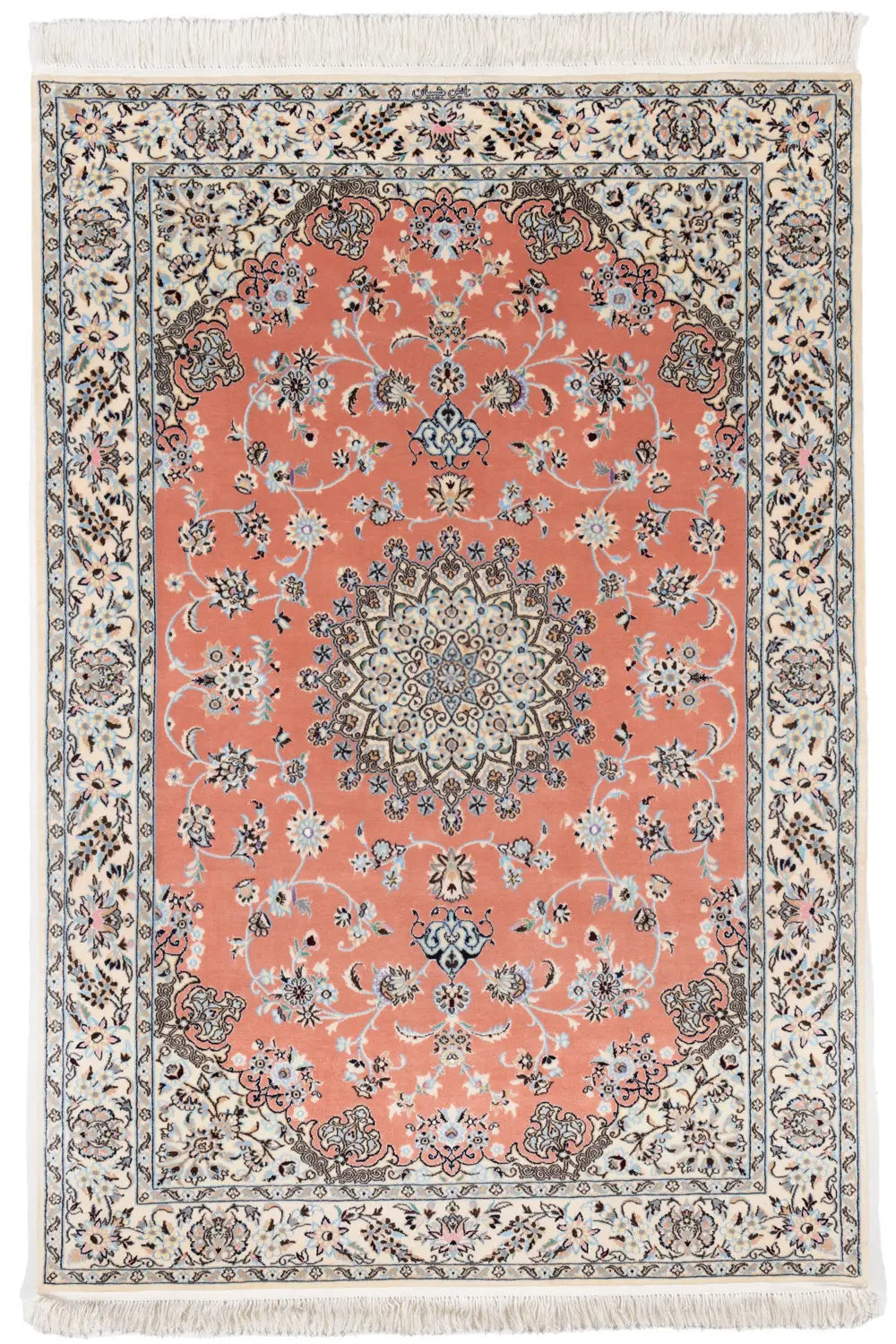

The history of Persian rugs is deeply intertwined with the rise and fall of dynasties, wars, and the movement of people. While invasions and civil strife temporarily diminished culture, they also served as opportunities to transmit techniques and aesthetic sensibilities to distant lands. Here, we will organize how Persian rugs have developed and changed through the ages amidst war and peace, from the medieval period to modern times.
Table of Contents
Seljuk Dynasty, Mongol Invasion, and the Transmission of Techniques
With the invasion of the Seljuk Dynasty (Turkic) in the 11th century, Persian rugs began to be influenced by Turkish culture. A representative example is the Turkish symmetrical knot, which facilitated a technical fusion.
The invasion of the Mongol Empire in the 13th century caused a decline in Persian art as a whole, and carpet production temporarily stagnated. However, a partial revival began under the Ilkhanate, which was under Mongol rule.
Furthermore, at the end of the 14th century, the conqueror Timur protected artisans without killing them and relocated them to his capital, Samarkand. This led to the widespread transmission of Persia's advanced weaving techniques and designs to Central Asia.
During the Timurids, the influence of Chinese culture was also added, and new motifs such as plant patterns resembling arabesques and dragons and mythical birds were woven into the carpets. This was an era where the movement of people due to war ultimately promoted the diversification of designs.
The Golden Age of Persian Rugs under the Safavid Dynasty
The Safavid Dynasty, established in 1501, is regarded as the golden age of Persian rug art. Under a powerful central government and relatively stable peace, carpets developed dramatically under the protection of the royal court.
In particular, the 5th monarch, Abbas I (Shah Abbas the Great), gathered excellent artisans and designers in Isfahan and had them create numerous masterpieces in the royal workshop. This period is also referred to as the "Renaissance of Persian Culture."
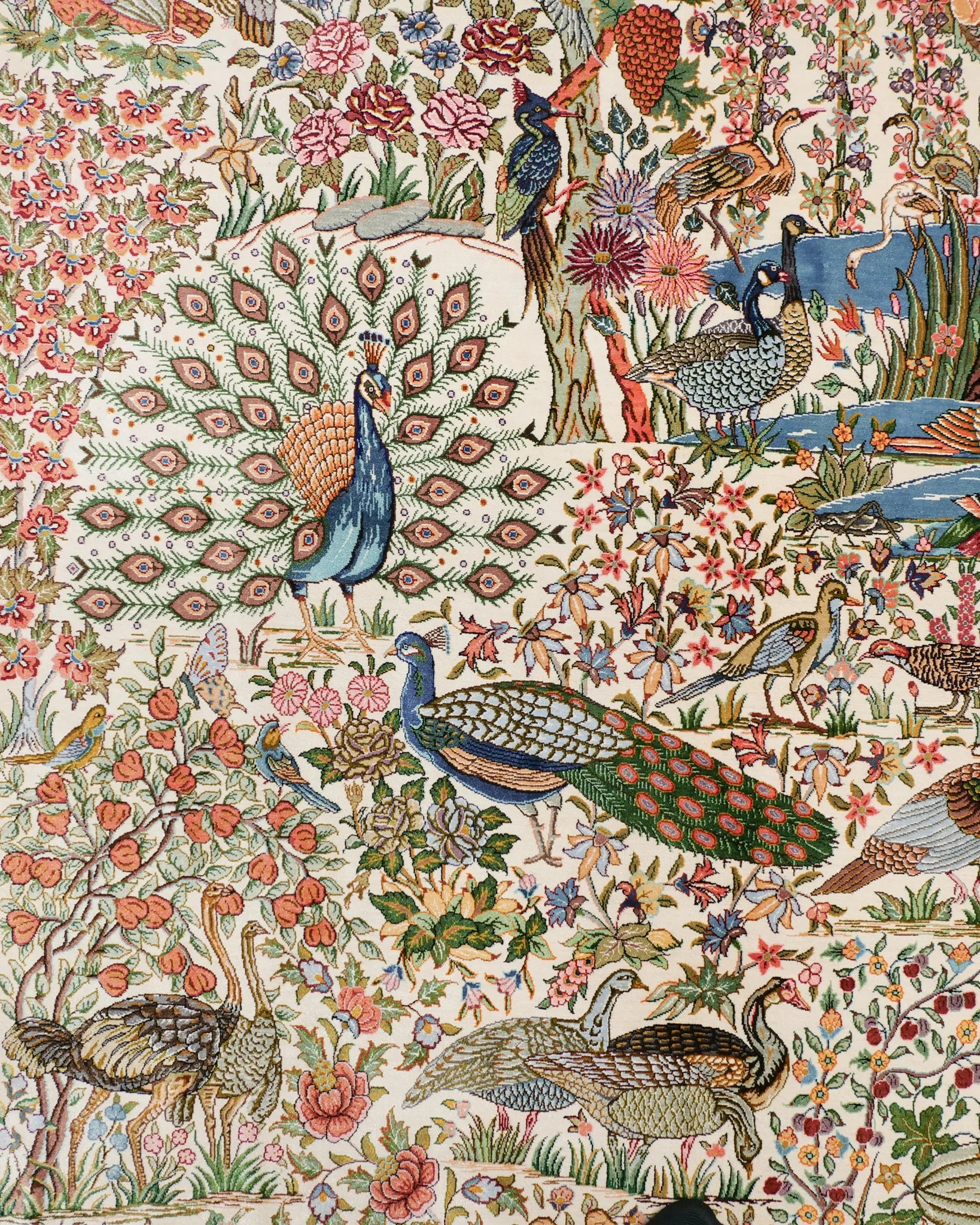
In addition to the establishment of intricate medallion patterns, magnificent designs featuring scattered flora and fauna, as well as pictorial carpets based on literature and epic poetry, emerged. A notable example is a piece depicting the hero Rostam from the 'Shahnameh' (Book of Kings) defeating a dragon.
Hunting scenes were also a popular theme, symbolically expressing the nobility's valor and the tranquility of nature. Thus, the high-quality carpets of the Safavid Dynasty became known worldwide as "art on the floor" and were used as diplomatic gifts.
Post-Safavid Collapse and the Industrial Revival of the 19th Century
In the early 18th century, taking advantage of the internal strife at the end of the Safavid Dynasty, Afghan forces invaded in 1722, leading to the fall of the capital, Isfahan. As a result, the royal workshops were destroyed, marking the end of the "court era" of Persian rugs.
With the country becoming a battlefield, the carpet industry nearly came to a halt, and it continued to languish for about half a century to a century. After the short-lived Afsharid Dynasty and civil wars, the Qajar Dynasty was established in the early 19th century, achieving national reunification.
Under relatively stable governance, the revival of traditional crafts was promoted, particularly in Tabriz, where modern carpet production was revived in the latter half of the 19th century. The increase in demand from Europe and America also served as a tailwind, leading to the creation of new patterns.
Although there was a temporary decline in quality due to mass production, traditional regions such as Kashan and Isfahan provided design contributions, leading to improvements in quality. Thus, Persian rugs were once again established as an industry.
Wars of the 20th Century and Modern Persian Rugs
Even in the 20th century, Persian rugs have been passed down through wars and political changes. After World War II, Reza Shah of the Pahlavi Dynasty established the Iran Carpet Company in 1935, encouraging carpet production under government leadership.
Even during the Islamic Revolution of 1979 and the Iran-Iraq War (1980-1988), production did not cease, and many weavers continued to uphold tradition. There are also examples where the movement of artisans avoiding the flames of war changed regional styles.
For instance, carpets from the Senneh region in western Kermanshah were influenced by the Bijar area due to evacuation during wartime, resulting in a thicker and more robust weave. This is an example of how war brought about the transmission of techniques and styles.
During the post-war recovery period, branches of carpet workshops were established in disaster-stricken areas, aiming for the regeneration of local industries and the continuation of traditions. Despite numerous challenges, Persian rugs continue to maintain their narrative and artistic qualities.