



How to Choose a Persian Rug
Expert Store Explains Size, Material, and Price Considerations
The starting point is whether you can love the colors and patterns.
We will systematically organize the placement, size, suitability of materials, and reasons for the price.
- Overall Picture of Choosing ― The Starting Point is the Feeling of "Like"
- What is a Persian Rug?
- Considerations for Placement and Size
- Consider Material Based on Usage
- There Are Reasons for the Price
- Back, Fringe, and Signature ― Highlights of Handwork
- Frequently Asked Questions
- Summary ― A Piece You Can Love for a Long Time
1. Overall Picture of Choosing ― The Starting Point is the Feeling of "Like"
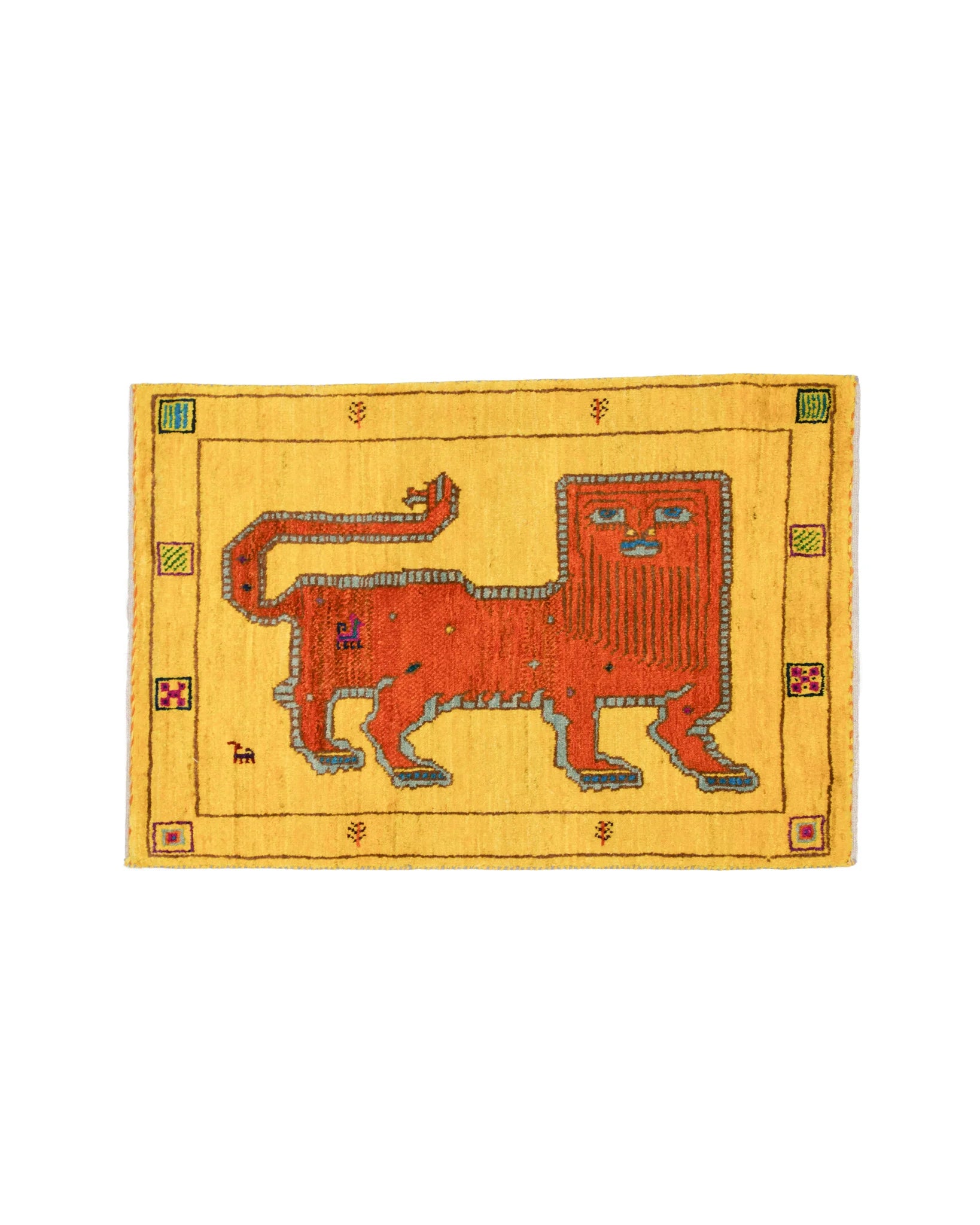
The most important thing when choosing a Persian rug is to feel that you want to keep it in your life for a long time the moment you see it. A Persian rug is not only a tool that supports daily life but also a craft that you can enjoy looking at the colors and patterns for a long time. Since it is something you see every day, the first criterion is whether your heart is moved by the colors and patterns, rather than comparing detailed specifications.
On the other hand, if you decide solely based on preference, small miscalculations can occur, such as hitting the door and not opening, furniture being unstable, or feeling larger than expected. Therefore, starting with the piece that moves your heart, you will align it with your lifestyle in the following order.
- Colors and Patterns ― Can you see yourself wanting to look at it for a long time?
- Placement and Size ― Does it fit the space and furniture?
- Material ― Which is more suitable for the space, wool or silk?
- Price ― Can you understand the reasons behind the price?
This article will systematically organize the areas where first-time buyers may get confused, following this order.
2. What is a Persian Rug?
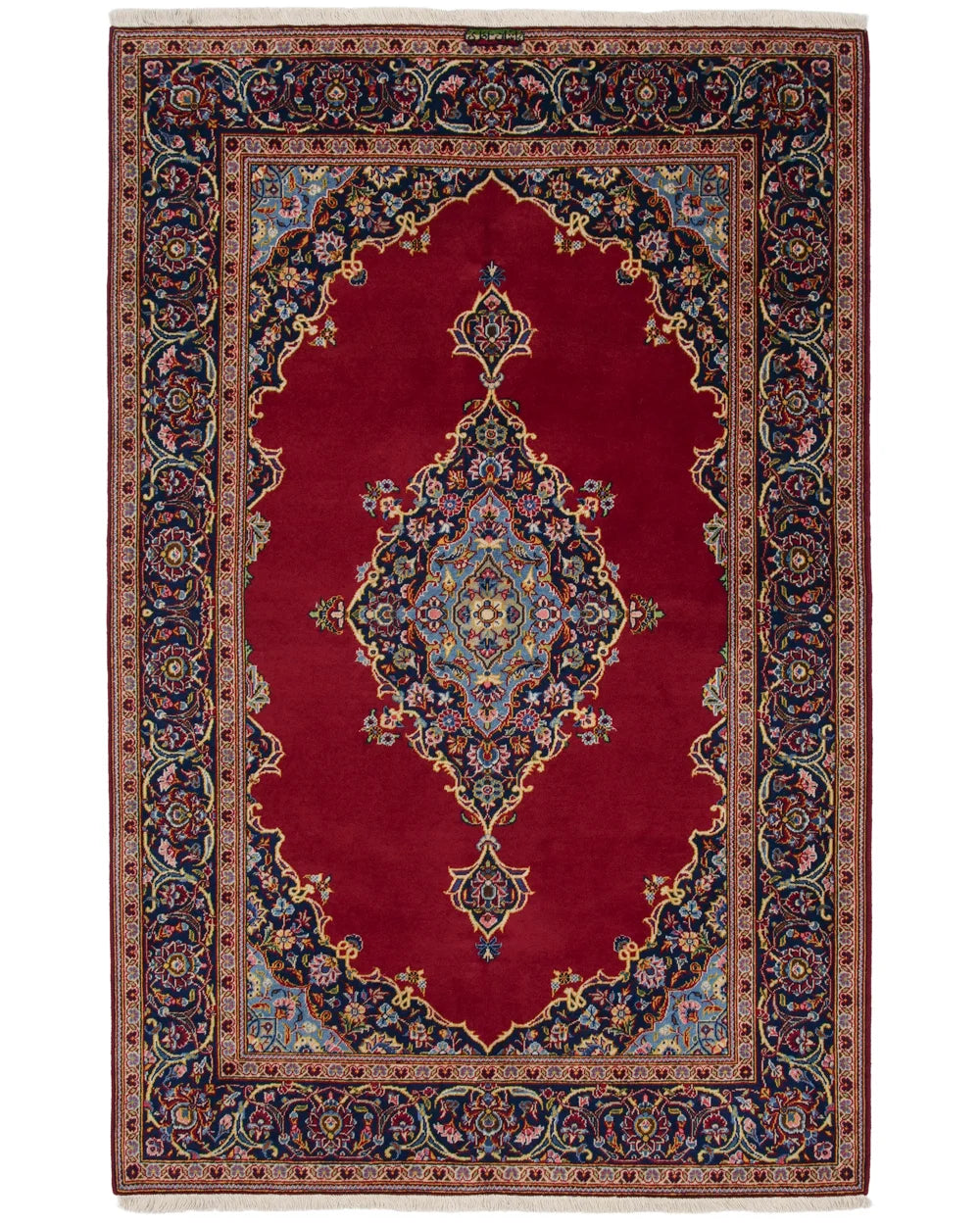
A Persian rug is a hand-knotted rug that has been passed down in various cities and regions of Iran, loved worldwide as a representative of hand-knotted rugs. Each production area, such as Tabriz, Nain, Isfahan, Qum, and Kashan, has different materials, patterns, and weaving tendencies that they excel in. The tradition of rug weaving in the Fars region and Kashan was listed as a representative item of UNESCO's Intangible Cultural Heritage in 2010.
What distinguishes a genuine Persian rug is not the price but whether it is hand-knotted. Being expensive does not mean it is genuine, and being affordable does not mean it is fake.
Turkish rugs and Indian rugs are separate weaving cultures with their own traditions and are not imitations of Persian rugs. Machine-woven rugs are also products with different characteristics, suitable for everyday use due to their uniform quality and affordable prices. As long as they are introduced by their proper names and the contents and prices are balanced, all of them can be good options.
Furthermore, since patterns have been shared across regions for a long time, having a "Persian-style pattern" is not the same as being a Persian rug.
3. Considerations for Placement and Size
When choosing a size, it’s important to not only consider the dimensions of the placement area but also to visualize how that space is used daily to get closer to a rug that fits your lifestyle.
- Does it overlap with the opening and closing of doors or drawers?
- What is the range of movement for tables and chairs?
- Will the legs of the sofa or bed be on the rug?
- Is it a frequently passed area or a place for dining?
- Are you using floor heating or a robot vacuum?
- Is it a location prone to direct sunlight or humidity?
Hand-knotted rugs vary slightly in size. Therefore, it is more practical to think of the size as a range, such as "if it fits within this size from here to there," rather than fixing it to a single measurement like "exactly 180×250cm." The wider the range, the more options you have for colors and patterns. Creating an outline on the floor with masking tape and trying it out with the furniture moved can help you grasp the feel better.
Additionally, leaving some floor space around the rug rather than covering the entire floor will make both the rug's pattern and the room itself look more beautiful.
4. Consider Material Based on Usage
The main materials for Persian rugs are wool and silk. It is not a hierarchy of "silk is above, and wool is below"; each has its suitable places. Wool is elastic and thick, strong against being stepped on, and relatively resistant to dirt. Silk can be made into finer threads, allowing for intricate patterns and a unique luster.
| Usage Area | Material Guidelines | Reasons |
|---|---|---|
| Living/Dining Room | Wool | In areas that are stepped on daily and where food and chair movement occur, elastic wool performs well. |
| Bedroom/Study | Wool, Silk | In rooms that are less frequently stepped on, you can enjoy the delicacy of silk at a leisurely pace. |
| Entrance | Wool, Silk | Wool is easy to handle in busy entrances, and if the entrance has little sand or moisture, silk can also be an option. |
| Wall Hanging/Tapestry | Silk | This is the best way to showcase intricate patterns and luster. |
Since silk is susceptible to friction, moisture, and direct sunlight, choosing the right location will help maintain its luster for a long time.
"Bamboo Silk" is a Different Material from Natural Silk
There are also rugs made from regenerated fibers called "bamboo silk," which are made from cellulose materials such as bamboo. This material allows you to enjoy a luster similar to natural silk at an affordable price, and it is a good option in itself. However, it is a different material from natural silk, and the price levels are also different. What you want to avoid is choosing it based on the same price criteria as natural silk without knowing the difference.
5. There Are Reasons for the Price
The price of Persian rugs is not determined solely by the material. Generally, the following factors combine to determine the price of each piece.
- Size and the materials used for the pile and foundation
- The fineness of the weave and the balance of lines and patterns
- The completeness of the design and color scheme
- The workshop and weaver
- Rarity and sourcing channels
The finer the knots, the easier it is to express delicate designs, but beauty and value are not determined solely by the number of knots. Additionally, even with similar quality, prices can vary from store to store due to sourcing channels and selling costs. The price itself is not proof of quality, and the reverse is also true. If the price is clearly stated and the store can explain the reasons when asked, you can compare with confidence.
The true value of a Persian rug lies in its ability to be used in daily life and enjoyed visually every day. When considering your budget, it’s also a good idea to account for small costs after purchase, such as non-slip pads or professional cleaning every few years, to ensure a long and pleasant relationship with your rug.
6. Back, Fringe, and Signature ― Highlights of Handwork
Here are some pleasures of appreciation when you take your time to face a rug in a store or at home.
There is Another Pattern on the Back
When you turn over a hand-knotted rug, the same pattern appears as knots on the back. This is proof that the craftsman wove each knot, and it is also the best place to see the fineness of the weave and the alignment of the lines.
The Texture and Light Change the Expression
The pile has a direction of the fibers, and the color intensity changes depending on the viewing angle and the way the light hits it. Even with the same piece, the charm of a hand-knotted rug is that it shows different expressions in the morning and evening, and from the entrance side and the window side.
The Signature is a Clue to the Maker
Sometimes the name of the workshop or weaver is woven into the design at the edge of the rug. This adds enjoyment as you can see the face of the maker, which also leads to affection for the piece. However, the signature alone does not determine the quality of the rug; it is important to appreciate the overall work, including the weaving, design, and finishing.
7. Frequently Asked Questions
Which is better, wool or silk?
It’s not about which is better; they are suitable for different places. Wool is easier to handle in areas that are stepped on daily or where food is present, while silk can be fully enjoyed for its delicacy and luster in rooms that are less frequently stepped on or for wall hangings.
Is a rug with finer knots a better rug?
The fineness of the knots is one indicator of the ability to express intricate patterns. However, value is not determined solely by that; it is decided by the harmony of the overall quality, including materials, design, weaving balance, and finishing.
Are Turkish rugs and Indian rugs imitations of Persian rugs?
No, they are rugs from different weaving cultures with their own unique traditions.
What can you learn by looking at the back?
In hand-knotted rugs, the back also shows the pattern with knots, allowing you to see the fineness of the weave and the alignment of the lines. For more details on the differences between hand-knotted and machine-woven rugs, please refer to this article.
8. Summary ― A Piece You Can Love for a Long Time
- The starting point is whether you can love the colors and patterns.
- Think of size not as a single number but with a range.
- Choose materials based on compatibility with the usage area, not hierarchy.
- There are reasons for the price. If the price is clear and the store can explain the reasons, you can feel secure.
What distinguishes a genuine Persian rug is whether it is hand-knotted. And what distinguishes a good purchase is whether you can love that piece for a long time. Enjoy the encounter with a piece that captivates your heart.
At SATHI RUGS, we introduce Persian rugs from Tabriz, Nain, Isfahan, Qum, and Kashan in our Yokohama Motomachi store and online store.
Please enjoy the encounter with captivating colors and patterns at your leisure.