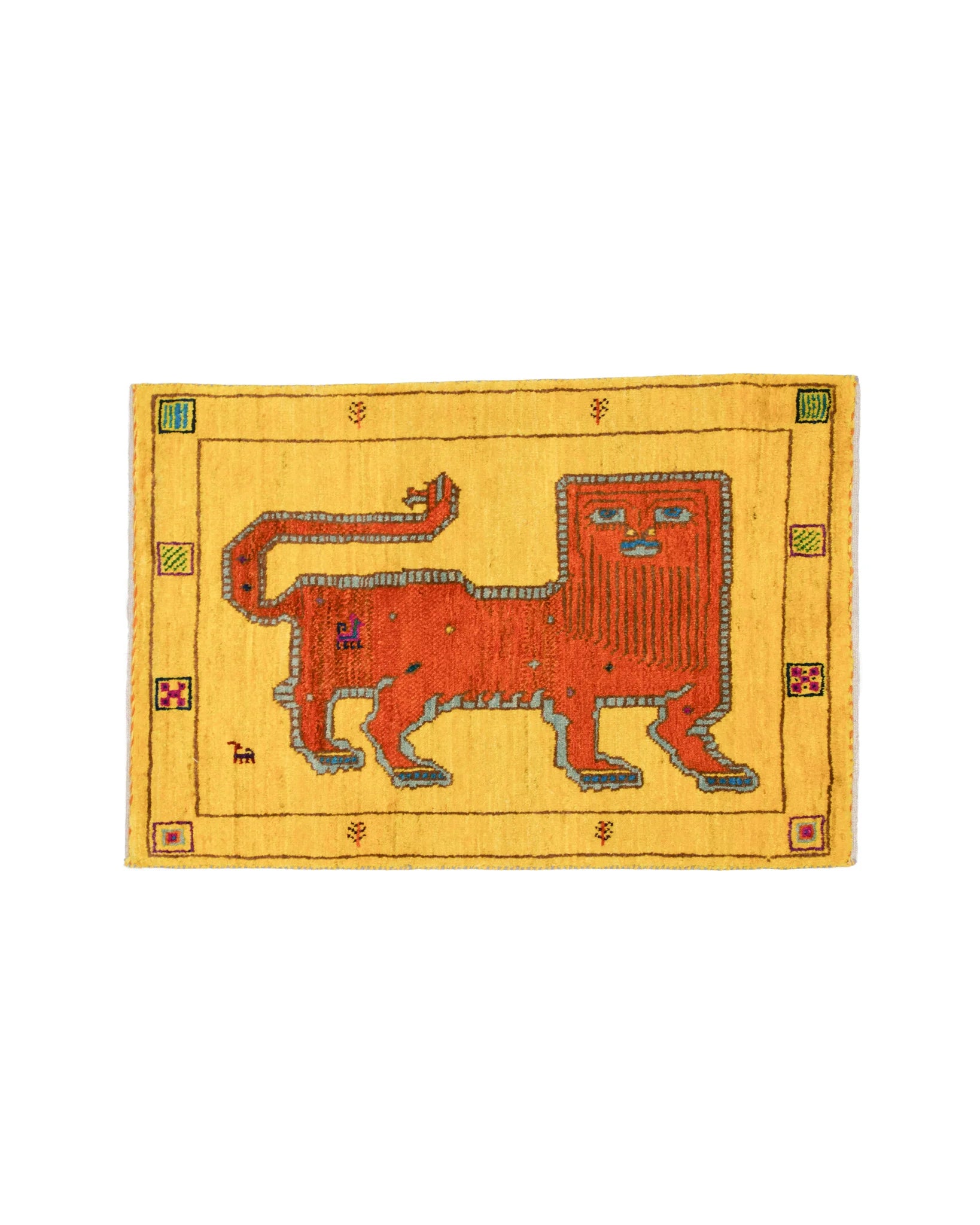


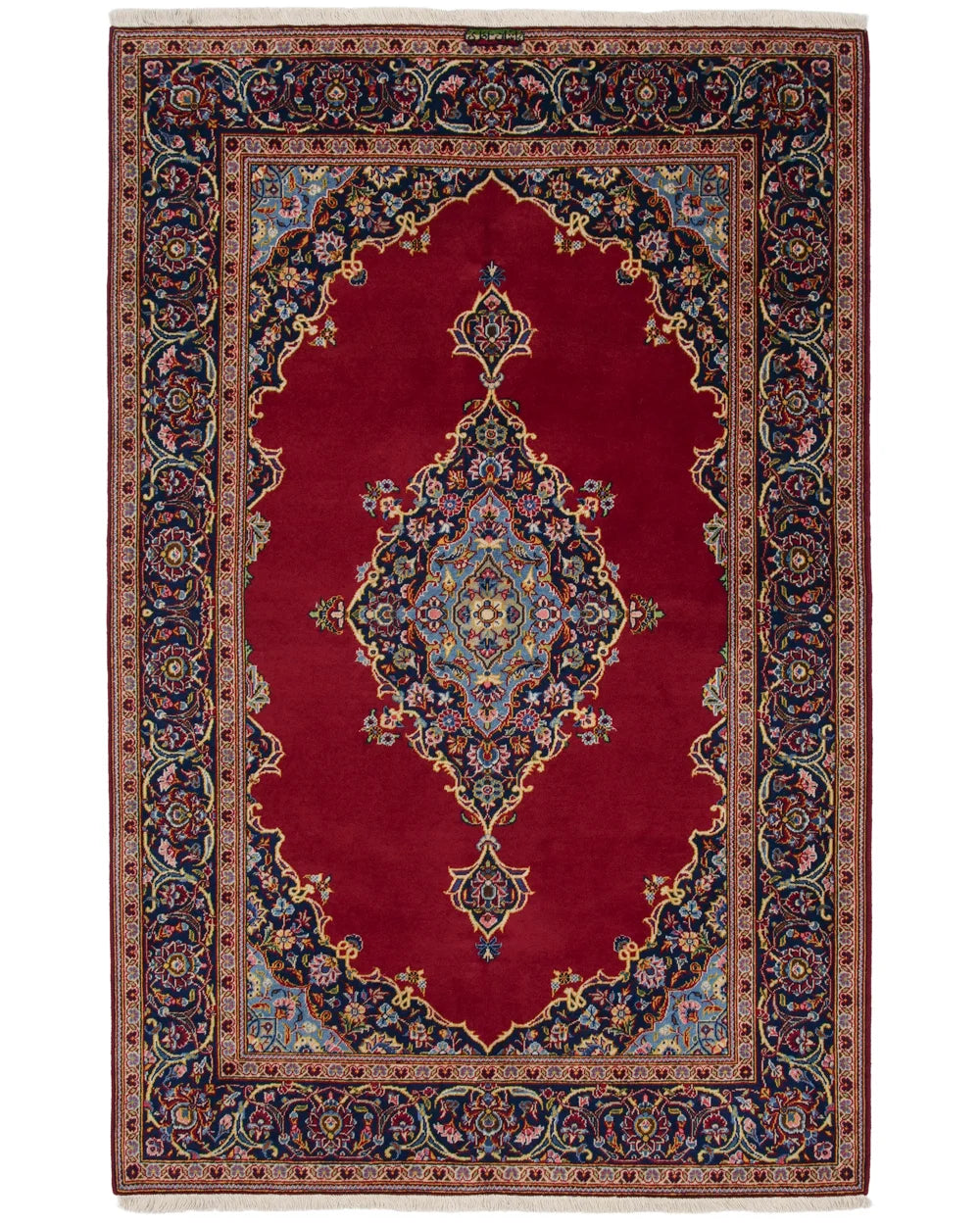


Types and Origins of Rugs
Even among the same "hand-knotted rugs", the weaving, colors, and patterns vary greatly by country and region. Please visit the detailed explanation page for the types and regions you are interested in.
Persian Rug Iran (formerly Persia). This is the mainstream of hand-knotted rugs, characterized by distinct weaving, colors, and patterns from each region.Learn MorePakistani Rug Centered around Lahore, it features intricate patterns and vibrant colors inherited from Persian designs.Learn MoreAfghan Rug Best known for octagonal gul patterns on a dark red ground. Rich and varied weavings passed down by Turkmen and Uzbek people.Learn MoreGabbeh A thick, hand-knotted wool rug born of nomadic weaving traditions. It features simple animal and plant patterns and a plush pile.Learn MoreKilim A flat-woven textile with no pile. It is a lightweight mat that expresses geometric patterns of color surfaces using weft and warp threads.Learn MoreOrigin Guide — Handwoven Rugs of the World
We have compiled the characteristics of weaving, colors, and patterns by region into groups. Please visit the detailed explanation page for the regions you are interested in.
Other Types
The two main categories are pile rugs with a long pile (such as Gabbeh) and flat-woven kilims with no pile.
Turkish Rugs (Hereke)
Hand-knotted rugs woven with the Turkish (Ghiordes) knot in geometric and floral designs. Hereke, near Istanbul, is especially renowned for fine weaving rooted in the Ottoman court workshops. See our Turkish rug collection.
Moroccan Rugs (Beni Ourain / Azilal)
Thick, plush hand-knotted rugs by the Berber (Amazigh) people of the Atlas Mountains. Representative types are the Beni Ourain, with simple black or dark-brown lines on undyed natural wool, and the Azilal, with free-spirited motifs in colored yarn. See our Moroccan rug collection.
Kashmir Silk
Hand-knotted silk rugs woven in the Kashmir region, spanning northern India and northeastern Pakistan. Their hallmark is vintage-like coloring and a supple feel.
Baluch
Hand-knotted rugs by the Baluch people, who live from western Afghanistan into eastern Iran. On deep navy or wine-red grounds they weave geometric patterns — and sometimes picture-like scenes — full of tribal rug character. As the Baluch live across borders, please check each product page for the country of production.
Technique Guide — Knotting, Density, Material, Dyeing
The expression of a Persian rug is determined by the combination of knot type, weaving density, material, and dyeing. Here are some basic terms to help you appreciate the words on the product pages more deeply.
Persian Knot (Asymmetrical Knot)
In this knotting method, the pile yarn wraps fully around one of two warp threads and passes under the other; it is also known as the Senneh knot. It excels at creating smooth curves, making it ideal for elegant patterns such as flowers and medallions. It is commonly found in regions known for delicate designs, such as Isfahan and Qum.
Turkish Knot (Symmetrical Knot)
This method involves knotting across two warp threads and is also known as Ghiordes knot. It is characterized by its crispness and works well with linear geometric patterns. It is frequently used in designs from the west of Tabriz and the Caucasus region.
Knot Density (Raj/Heft)
This indicator shows how many knots are arranged within a certain width; a larger number indicates finer knots. Raj is used in Tabriz and counts the number of knot rows per 7cm width. In Isfahan, the unit Heft is used, counting the color-different vertical threads (marker lines) that are evenly spaced between the fringe and pile on the back of the rug to indicate weaving fineness. Generally, the range is about 7 to 16 hefts per meter, with a higher number indicating higher density. Both raj and heft are regional trade conventions, not unified official standards. Density serves as a guideline for the precision of urban workshops, while tribal tribal rugs are valued based on design, color, and material rather than density.
Materials (Wool/Silk/Cotton Warp)
Wool breathes and adjusts humidity, providing resilience and deep coloration that returns after being stepped on. Silk shines softly under light, with a supple texture and a delicate luster. As it is a delicate material, keeping it out of direct sunlight helps preserve its beauty. In urban workshop rugs, the base Cotton Warp stabilizes dimensions and maintains shape over time, while Gabbeh and tribal rugs often use wool warps, giving them a plump, soft feel.
Silk Touch (Wool with Silk-like Luster)
Silk Touch is a type of wool. It is carefully processed and brushed wool that achieves a silk-like luster and soft, thick pile; it is not silk. It refers to the moist and lustrous texture of wool seen in Pakistani rugs such as Jaldar.
Grade "Fine"
A grade term used in the rug trade for pieces with especially fine weaving and precise craftsmanship.
Natural Dyes
Reds come from madder and cochineal, yellows from plants such as larkspur, and blues from indigo, layered through repeated dyeing. It is slow work of refining, dyeing, and washing — depending on the process, the dyeing alone can take more than a week. Colors derived from natural sources are deep, and blend in beautifully underfoot the longer they are used.
Abrash
Gentle, band-like shifts in the ground color of a hand-knotted rug. They occur naturally with hand-spun yarn and small dye lots, and are appreciated as a mark of handwork rather than a flaw. Note that abrash by itself is not proof of natural dyes.
Fringe
This refers to the fringe of warp threads (vertical threads) that appear at both ends of the rug. At the ends of the pile or flat-woven sections, the base warp threads are exposed, and they are gathered or tied to prevent fraying. In handwoven rugs, the base warp threads become the fringe and appear symmetrically on the left and right short sides (the edges of the long sides are referred to as "ears").
Signature
On workshop rugs from Isfahan, Qum and other cities, the name of the workshop or master weaver is sometimes woven into the edge of the rug — this is called the signature. The workshop names in our product titles are based on these signatures and on information from the time of purchase. You are welcome to examine the signature on the actual piece at our store.
Dictionary of Persian Rug Patterns
This gently explains representative patterns woven into Persian rugs from both shape and meaning perspectives. Knowing the names of compositions and motifs when selecting a piece greatly expands your understanding.
Medallion
This is the most beloved composition, featuring a large circular or oval shape at the center of the rug. It is said to have developed from the designs of manuscript bindings and became widespread as a central composition during the Safavid period. The typical form is the "Medallion-Corner" with corner motifs added to the four corners.
Herati (Mahi)
This elegant all-over pattern features a series of shapes reminiscent of small fish. "Mahi" means fish in Persian. It is said to symbolize peace and happiness in the home and is favored in weaving in regions like Tabriz and Bijar.
Boteh (Paisley)
The motif is shaped like a curved magatama, known as paisley in English. It can be used in various ways, such as being spread across the entire surface or lined along the border. There are several theories regarding its origin, including Iranian and Kashmiri theories, but we do not make a definitive statement here. It is a different pattern from the upward-pointing cypress.
Gol (Gül)
An emblematic motif found in many Turkmen-style rugs, with shapes that vary by tribe and type — octagons, ovals, and angular diamonds. It is said to have been woven down the generations as a tribal mark. Its geometric appeal stands out against a strong red ground. "Jaldar", common among our Pakistani rugs, arranges diamond-shaped guls in neat rows.
Bokhara Design
A popular name for designs that line up oval guls in neat rows, woven widely in Pakistani rugs. Derived from Turkmen guls and named after the Central Asian city of Bukhara, it refers to a pattern, not a place of production. It can be told apart from "Jaldar", which lines up diamond-shaped guls.
Tree of Life / Cypress
A pattern depicting a tree with rich foliage, symbolizing life, abundance, and longevity. The slender, upward-pointing cypress is also represented as a type of Tree of Life, differing in appearance from the magatama-shaped motif.
Border
A band-like frame that surrounds the field, serving to tighten the overall rug. It is common to combine a thick main border with a thin secondary border.
The best way to choose a rug is to see, touch, and select it according to your room. At our Yokohama Motomachi store, our staff guides you through each piece from the introduced regions and types to match your room's image.
See the actual items at Yokohama Motomachi StoreSearch from stock