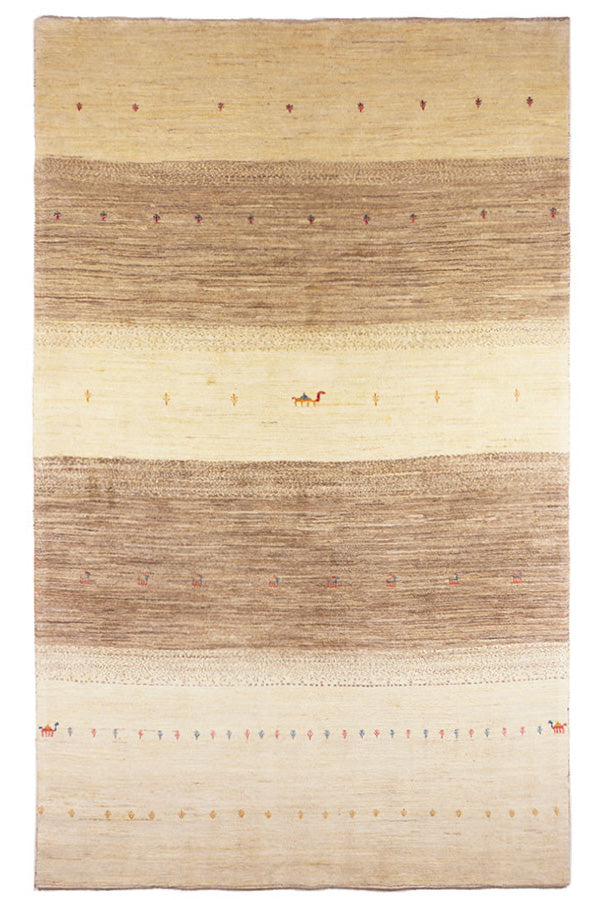
The difference between hand-knotted and machine-woven Gabbeh lies in the materials, manufacturing methods, durability, price, and design.
Gabbeh is a traditional rug hand-knotted by nomadic tribes in southwestern Iran, where skilled artisans create each knot individually, making the production time-consuming and labor-intensive.
Machine-woven Gabbeh is mass-produced on factory looms, typically using a method that adheres wool yarn to a base fabric with glue, and is primarily produced in India.
Hand-knotted Gabbeh uses high-quality natural materials such as wool and silk, dyed with plant-based dyes, resulting in rich colors and a warm texture.
In contrast, machine-woven Gabbeh often incorporates synthetic fibers, which may mimic the appearance of natural materials but fall short in texture and durability.
Hand-knotted Gabbeh is woven at a high density, boasting durability that allows for decades of use.
In terms of design, hand-knotted Gabbeh reflects the artisan's sensibility, allowing for intricate patterns and gradations.
Machine-woven Gabbeh features uniform and orderly patterns, but the range of designs is limited, primarily focusing on small motifs of trees or deer and stripes, lacking the individuality that comes with one-of-a-kind pieces.