



The Hereke rug is a luxurious hand-knotted rug traditionally crafted in the town of Hereke, near Istanbul in northwestern Turkey. Its origins date back to 1841, when Sultan Abdulmejid I of the Ottoman Empire established the imperial weaving factory "Hereke Imperial Workshop" for palace textiles. The Sultan gathered skilled artisans from across the empire to weave rugs for the palace, and the rugs produced here became known as "Hereke rugs."
During the Ottoman Empire, Hereke rugs were made in large sizes to adorn the grand halls of palaces. A prime example is the Hereke rug laid in the "Ambassador's Room" of the Dolmabahçe Palace in Istanbul, measuring approximately 120 square meters. Initially limited to palace decoration, these rugs later became official gifts for foreign dignitaries after the palace interiors were completed. Sales to the general market were permitted starting in 1890, but only a select few merchants were authorized to handle them.
After the collapse of the Ottoman Empire, production temporarily declined, but by the mid-20th century, skilled weavers revived traditional techniques, and the craft of Hereke rugs continues to be passed down to this day.
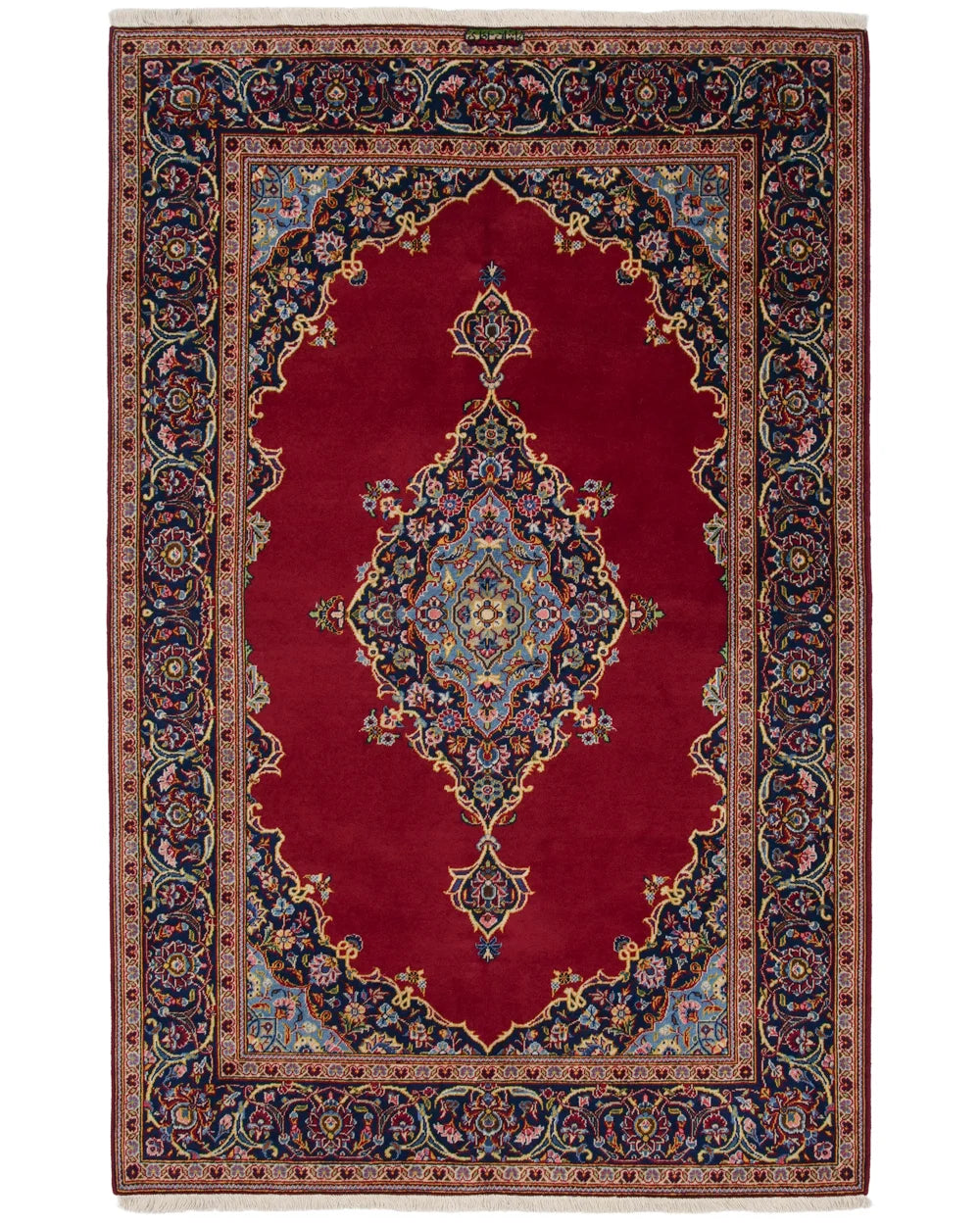
The designs of Hereke rugs are heavily influenced by the culture of the Ottoman Empire and Islamic art. Geometric patterns and floral motifs are predominantly used, with intricate representations of arabesques and flower designs. Traditional themes also include prayer rugs incorporating mihrabs (arched designs for prayer) modeled after the niches in Islamic prayer halls, and patterns centered around the "Tree of Life."
The color palette often features rich tones such as deep crimson, azure, and dark green, combined with ivory, gold, and beige, creating a heavy yet vibrant aesthetic.
Historically cherished among royalty and nobility, Hereke rugs are known as symbols of luxury and the highest quality. They are still regarded as one of the finest hand-knotted rugs in the world, alongside renowned Persian rugs from Isfahan, Qum, and Tabriz.